An Irish Man Interprets the World

The Pain of Painlessness

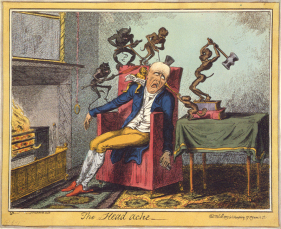
Imagine having a condition which meant you are unable to feel pain. It sounds blissful.

Yet, for Steven and his brother, this was far from the case.[1] When he was 4-5 months old, he began chewing on his tongue as he was teething, unable to sense the pain this would usually cause. Once his condition, congenital analgesia,...

If Jesus had an iPhone on Palm Sunday…
What would the Social Media universe have looked like if the people watching Jesus riding into Jerusalem were busy on their phones? Well, if anyone ever goes back in a time machine and gives Jesus’ disciples iPhones, maybe these sort of things are what you would see…


It all started when Jesus, en route to Jerusalem, tweeted two...

Ireland and the three thousand of Gallipoli…  

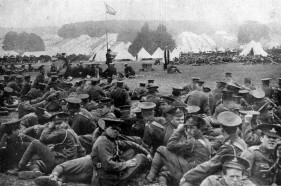
Above: The 10th Irish division, composed of volunteers from across Ireland, which fought at Gallipoli

  Ireland has been officially neutral in terms of international conflict for around 8 decades, since the 1930s.

Yet it has not been immune from the turmoil of the 20th century, which saw the advent of the largest and most destructive wars of all history. Before its...

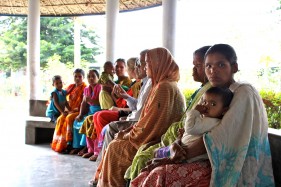
4 Challenges Mothers face worldwide

Lethal risks during pregnancy: In the USA, as a result of pregnancy-related causes, 28 women die per 100,000 births, which, to compare, is a higher rate than Thailand (26 deaths), Iran (23) and Saudi Arabia (16). Eastern European nations Poland (3) and Bulgaria (5) have considerably lower rates than both the UK (8) and Ireland (9).[1] As such, all nations, even more ‘developed’...

GDP vs. Gross Domestic Happiness?

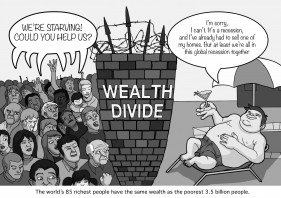
When did you last see a headline celebrating a growth in GDP as a major success for a country? A falling GDP is part of what it means to be in ‘recession’ – that dreaded word that has haunted Western economies for the past few years. If a recession is severe enough (if GDP falls more than 10%), it becomes labelled...

6 reasons why Climate Change is an urgent Human Rights issue…

Climate Change. What comes to mind? Protesters tying banners on factory chimneys? Radical environmentalists? Al Gore? When one sees the issues of the world, from child soldiers to mass oppression to even genocide, why do we need to worry about whether the summer is going to be a little hotter next...

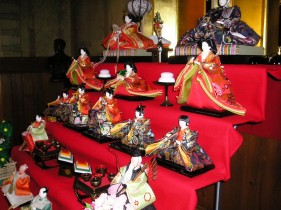
Hinamatsuri Stand

Happy Hina-matsuri!

Yesterday was Hina-matsuri, otherwise known as “the Doll’s Festival”, in Japan. Families construct seven-tiered stands onto which they place Hina-ningyo: dolls made especially for the festival. They carefully arrange figurines representing the old Emperor and Empress and the imperial household. The display can...

Could you patent the sun? The Beginning of the End for Polio…

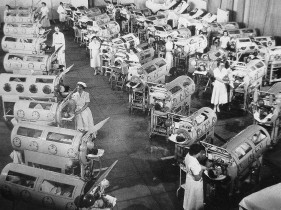
The 1952 polio epidemic killed 3,145 and paralysed 21,269 men, women and children in the US.  Two years later, on 23 February 1954, Virologist Jonas Salk brought a glimmer of hope to Pittsburgh.  On this day,  61 years ago, the first large-scale inoculations of children began today. Just over a year later, the vaccine was declared by the University of Michigan to be ‘safe and...

What is justice? The Galapagos oil spill…

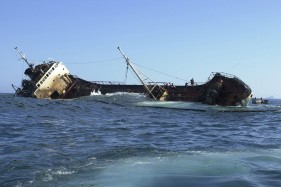
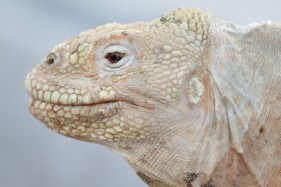
Let me pose an unusual question: What do cats, avocados and oil tankers have in common? Answer: All three have become threats to the unique environment of the Galápagos Islands, part of Ecuador, located in the Pacific Ocean. Made famous by the work of Charles Darwin, they are home to unique species of penguin, marine iguana and giant tortoise, as well as 25,000 people. The...

Is this a distantly-related cousin?

Do we have the right to eradicate diseases?

180 years ago today, 7th January 1835, HMS Beagle dropped anchor on the Chonos Archipelago. Charles Darwin was on board. He would spend the next number of weeks conducting research. By November 1859, Darwin had published ‘On the Origin of Species’. His book transformed the study of the natural sciences.

Darwin’s central thesis argued that the diversity of Earth’s life...

Children of Cape Town

Celebrating Kaapse Klopse…

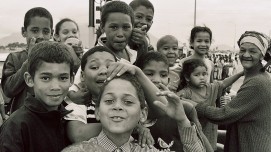
On 2nd January every year, the streets of Cape Town, South Africa, are filled with ecstatic crowds. It’s the Kaapse Klopse (‘Cape Clubs’) carnival, a time of joyful music, bright costumes, and unified community.

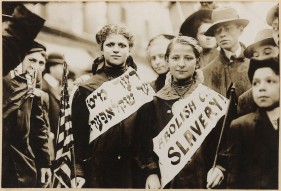
Kaapse Klopse has its roots in the regrettable days of slavery. Until the 1830s, slavery was common in South African society. Like us, the slaves celebrated...

“The biggest disease today is not leprosy or tuberculosis but rather the feeling of being unwanted, uncared for, and deserted by everybody.”

– Mother Teresa