In May 1991, the member states of the World Health Assembly (WHA), the governing body of the WHO (World Health...
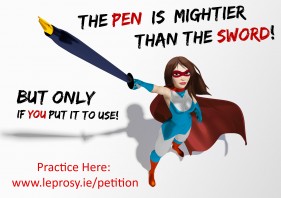
A Petition to Change the World…
The WHO and the promise to eliminate leprosy…
In May 1991, the member states of the World Health Assembly (WHA), the governing body of the WHO (World Health...
The persuasive Irish have perfected their use of stories. They use the power of language to carefully craft detailed images and metaphors, to evoke emotion, or make a point, where non-fiction would struggle. Our poets, authors and...
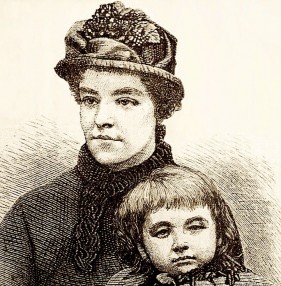
A little north of St Paul’s Cathedral in London, you’ll find the small Postman’s Park. Nestled beneath an unassuming wooden shelter, there is a wall with a series of 54 tiles. Each one carries at least one name, every name the name of a hero who laid down life to save another. Surprisingly, many are...
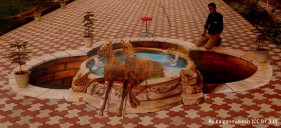
Can you make sense of this picture? It is April Fool’s Day, but the above image is taken naturally, and has had no computer-generated alteration…
Three questions:
What about the pool? It looks like...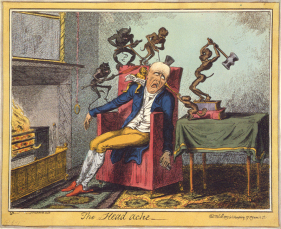
Imagine having a condition which meant you are unable to feel pain. It sounds blissful.
Yet, for Steven and his brother, this was far from the case.[1] When he was 4-5 months old, he began chewing on his tongue as he was teething, unable to sense the pain this would...

What would the Social Media universe have looked like if the people watching Jesus riding into Jerusalem were busy on their phones? Well, if anyone ever goes back in a time machine and gives Jesus’ disciples iPhones, maybe these sort of things are what...
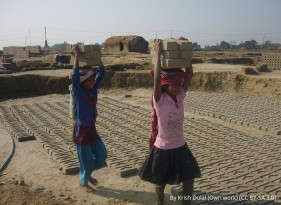
On Sunday, 28th October 1787, an English politician wrote in his diary, “God Almighty has set before me two great objects, the suppression of the slave trade and the Reformation of society.” This man was William Wilberforce, who committed himself to fighting against an institution that had been integral to...
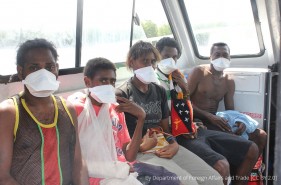
One in three people worldwide are infected. When it becomes active, without proper treatment, it will be fatal for up to two thirds of cases. In fact, it is second only to AIDS in deaths caused by a single infectious agent. In 2013, it killed 1.5 million people worldwide.[1]
Today is World Tuberculosis Day.
The culprit of countless millions...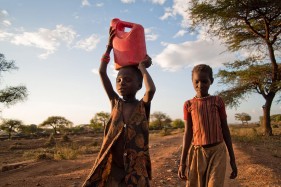
On one side of the world:
8 billion people, around 1 in 6 people, drinks water contaminated with faeces.[1]More people have access to mobile phones than working toilets. Only a third of the population of India has access to adequate sanitation.[2]
In 76% of households, women and children bear the primary responsibility of...
This is Indrakhala. She lives in the beautiful country of Nepal. She has her home next to the mud homes of her extended family.[1]
Yet the key word here is ‘next to’. In this photo she gently smiles, but, in reality, her life is far from beautiful. Years ago,...
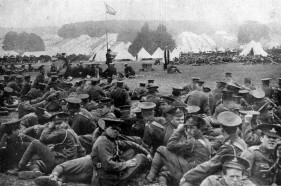
Ireland has been officially neutral in terms of international conflict for around 8 decades, since the 1930s.
Yet it has not...
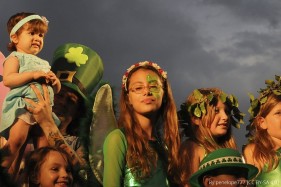
Ireland has only 0.064% of the world’s population. Yet it has international influence that far exceeds its size. Today, St Patrick’s celebrations involve over 150,000 people in New York City alone,[1] and around 34 million Americans consider themselves to have Irish heritage, over 7 times the population of Ireland...
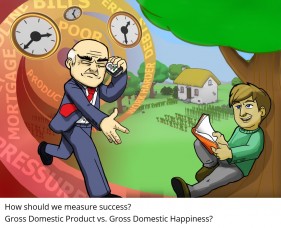
When did you last see a headline celebrating a growth in GDP as a major success for a country? A falling GDP is part of what it means to be in ‘recession’ – that dreaded word that has haunted Western economies for the past few years. If a recession is severe enough (if GDP falls more than 10%), it becomes...
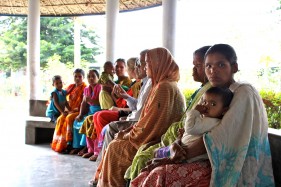
Sunday was International Women’s Day. It adopted the strapline “Make it Happen”. It’s a clear statement that enough talking has been done – it’s time to ensure gender equality. What is gender? When we’re born, whether we are male or female depends on whether we end up possessing a...
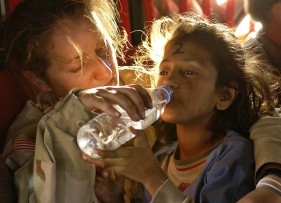
Climate Change. What comes to mind? Protesters tying banners on factory chimneys? Radical environmentalists? Al Gore? When one sees the issues of the world, from child soldiers...
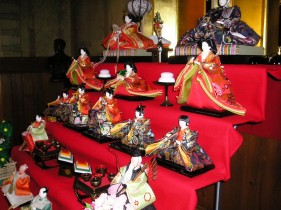
Yesterday was Hina-matsuri, otherwise known as “the Doll’s Festival”, in Japan. Families construct seven-tiered stands onto which they place Hina-ningyo: dolls made especially for the festival. They carefully arrange figurines representing the old Emperor and Empress and the imperial household. The display can even...
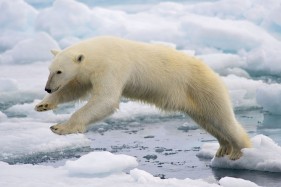
Maybe you missed it on Friday, but it was International Polar Bear Day.
What does the Polar Bear make you think of? Cute, fluffy animals? A landscape of snow, glistening in the sun in a frozen utopia? Nostalgic Christmas cards? For some, the humble creature, which lives in the Arctic region, has become a symbol of world transformation.
2015 may be the most...
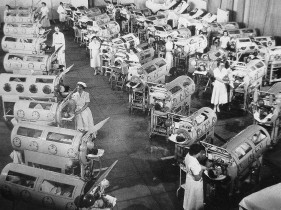
The 1952 polio epidemic killed 3,145 and paralysed 21,269 men, women and children in the US. Two years later, on 23 February 1954, Virologist Jonas Salk brought a glimmer of hope to Pittsburgh. On this day, 61 years ago, the first large-scale inoculations of children began today. Just over a year later, the vaccine was declared by the...

It looks to a bright hope of a future in which all people, regardless of race, gender, religion, nationality, age, background, or disability, have equal prospects to flourish. It looks to a society in which no person is treated as inferior to...
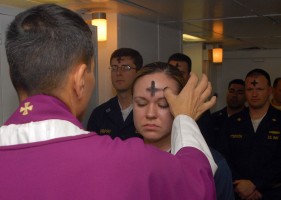
For some it’s little more than a curiosity following Pancake day. For others it’s a time of deep searching and resolution.
Yesterday, Ash Wednesday marked the first day of Lent, a period commemorating the time spent by Jesus in reflection wandering through the wilderness (Matthew 4:1-11). Traditionally, Lent is remembered with fasting. After using up food supplies on the Tuesday...
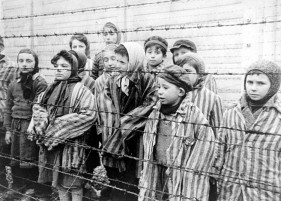
27th January 1945 was a momentous day in history. 70 years ago today, Soviet forces liberated the notorious Auschwitz concentration camp. The liberation of Auschwitz was a red letter day after the genocide of 6 million Jews, 1 million from the travelling community, 250 thousand...
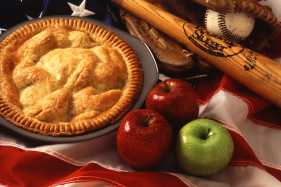
Today is National Pie Day in the USA. It’s not to be confused with the number Pi, or the film the Life of Pi, which focusses more on being stuck in a lifeboat with a tiger! It’s genuinely...
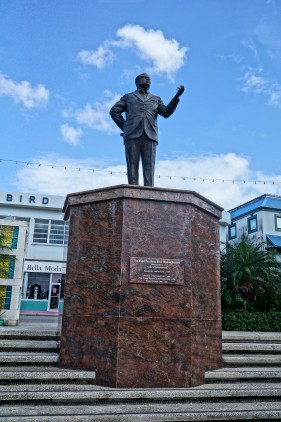
Today is Errol Barrow’s birthday. It’s a public holiday in Barbados. It’s a reminder that effective political change can come without violence, terrorism or war. It’s also a...
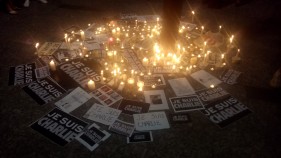
Volumes and volumes have already been written about the events in Paris last week. There is little I can add to the discussion. But, I prayerfully remember God’s command, through the writings of St. Paul in his letter to the early Christian community in Rome, “Rejoice with those who rejoice, weep with those who...
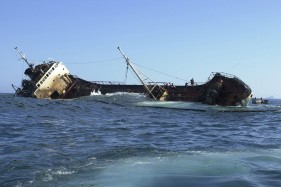
Let me pose an unusual question: What do cats, avocados and oil tankers have in common? Answer: All three have become threats to the unique environment of the Galápagos Islands, part of Ecuador, located in the Pacific Ocean. Made famous by the work of Charles Darwin, they are...

Today would have been the date St Patrick, Jonathan Swift and William Shakespeare celebrated as New Year’s Day. You and I might say it’s the...
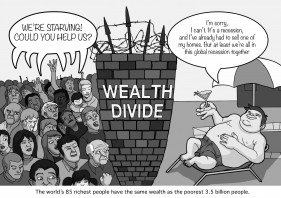
Any thoughts on today’s cartoon? How have we got into a situation when so few people hold such an incredible proportion of the world’s wealth?...
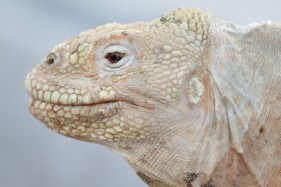
180 years ago today, 7th January 1835, HMS Beagle dropped anchor on the Chonos Archipelago. Charles Darwin was on board. He would spend the next number of weeks conducting research. By November 1859, Darwin had published ‘On the Origin of Species’. His book transformed the study of the natural sciences.
Darwin’s central thesis argued that the diversity of...
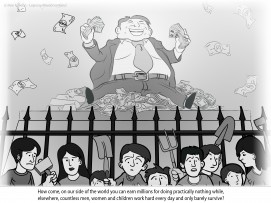
What do you think? Any comments or thoughts are welcome…
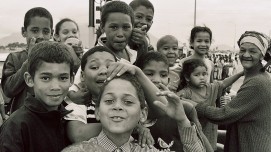
On 2nd January every year, the streets of Cape Town, South Africa, are filled with ecstatic crowds. It’s the Kaapse Klopse (‘Cape Clubs’) carnival, a time of joyful music, bright costumes,...
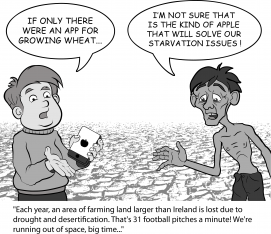
Did you see last Friday’s cartoon? The statistic is startling. The United Nations confirms that 12 million hectares of land useful farming land is lost each year.[1] That’s an area almost one and a half times the size of Ireland.
There are only 150 million km2 of land area in the entire world....
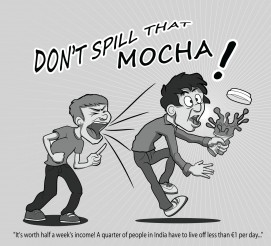
What could you buy with €1? Most places in Ireland wouldn’t even give you a glass of lemonade for this price, let alone a Mocha coffee! Yet for a quarter of India, a...

In UK, more than one third of adolescent girls, and one fifth of boys, have self-harmed.[1] In USA, suicide kills more young people than cancer.[2] Countless people have such a low sense of self worth that they think life no longer worth living.
Gold, an inanimate metal, is...
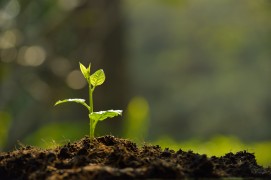
How are you celebrating “World Soil Day”? I suspect that, for most reading this blog, it wasn’t high on your agenda.
There is a global community of 60,000 scientists who dedicate their lives to the study of soil. They’re constantly questioning what the rest of us take for granted....
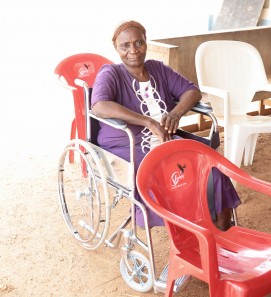
Today is the International Day of Persons with Disabilities. The precise title of the day is important. It represents a progressive move in language and understanding: no person is fundamentally ‘disabled’. There are, more correctly, ‘persons with...
“The biggest disease today is not leprosy or tuberculosis but rather the feeling of being unwanted, uncared for, and deserted by everybody.”
– Mother Teresa

Today is World AIDS day. Whatever you do to count down to Christmas, spare a thought for countless HIV-positive individuals would give anything they owned to be cured in the next 24 days. AIDS is at present incurable,...

Today is Advent Sunday, the fourth Sunday before Christmas Day – It marks the beginning of a season which many will associate with growing...
Just over a month ago, India’s Mars probe, the Mangalyann, survived the 298-day journey to Mars, and was successfully in orbit around Mars. The Indian space...